
Coated Seamless Gloves
Liberty Safety’s coated seamless gloves are built for performance in challenging work environments—whether you’re handling oily surfaces, abrasive materials, or unpredictable conditions. Engineered for durability, dexterity, and dependable protection, these gloves help reduce hand fatigue, enhance precision, and deliver superior grip throughout the workday. With a wide range of coating types, grip patterns, and protection levels, Liberty Safety makes it easy to select the right glove for every task and every environment.
Liberty Safety’s coated seamless gloves are built for performance in challenging work environments—whether you’re handling oily surfaces, abrasive materials, or unpredictable conditions. Engineered for durability, dexterity, and dependable protection, these gloves help reduce hand fatigue, enhance precision, and deliver superior grip throughout the workday. With a wide range of coating types, grip patterns, and protection levels, Liberty Safety makes it easy to select the right glove for every task and every environment.
Showing 1–20 of 38 results
-
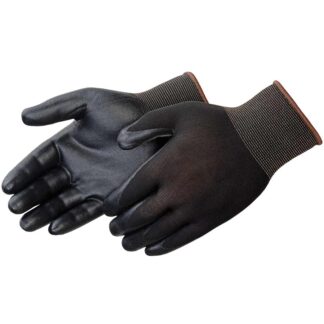 F4631BK
FLX™
13 Gauge Black Foam Nitrile Coated Seamless Gloves

-
 F4630GC
FLX™
13 Gauge Gray Nitrile Coated Seamless Gloves
-
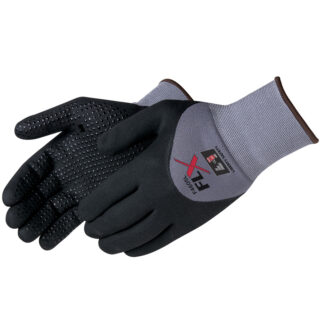 F4605
F4605FLX™
15 Black Microfoam Nitrile 3/4 Coated Seamless Gloves
-
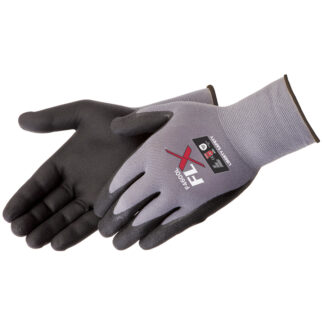 F4600
F4600FLX™
15 Gauge Black Microfoam Nitrile Coated Seamless Gloves
-
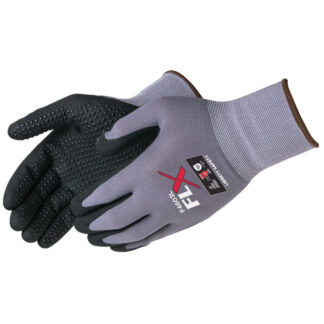 F4603
F4603FLX™
15 Gauge Black Microfoam Nitrile Coated Seamless Gloves
-
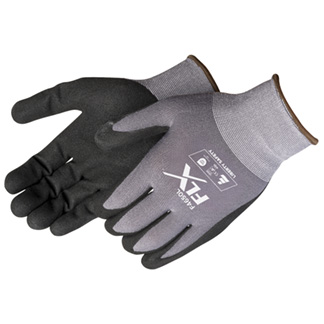 F4650
F4650FLX™
15 Gauge Black Sandy Nitrile Coated Seamless Gloves
-
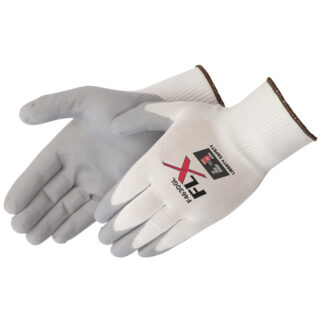 F4630G
FLX™
15 Gauge Gray Nitrile Coated Seamless Gloves
-
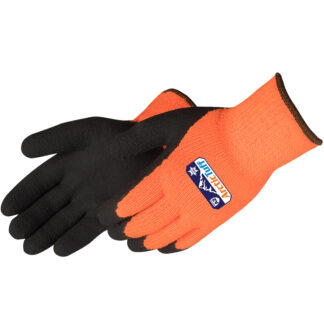 F4789HO
Arctic Tuff™
Black Foam Latex Coated Seamless Gloves
-
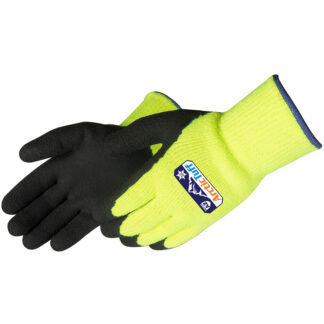 F4789LG
Arctic Tuff™
Black Foam Latex Coated Seamless Gloves
-
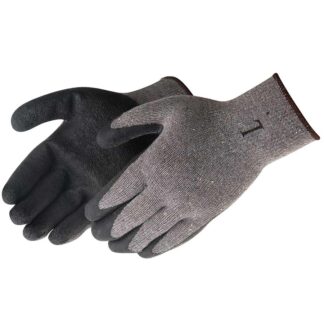 4729SP
FLX™ LTE
Black Latex Coated Seamless Gloves
-
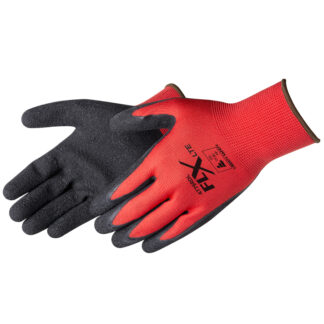 4779RD
FLX™ LTE
Black Latex Coated Seamless Gloves
-
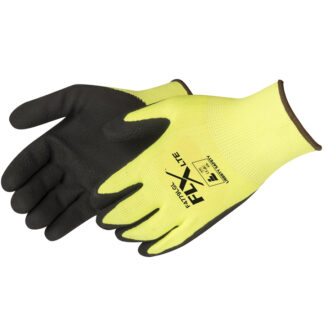 F4779LG
FLX™ LTE
Black Latex Coated Seamless Gloves
-
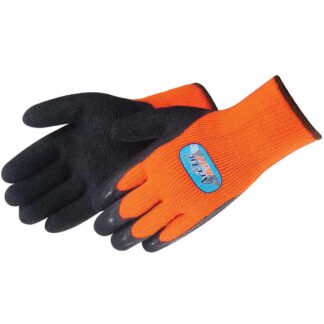 4789HO
Arctic Tuff™
Black Latex Coated Seamless Gloves
-
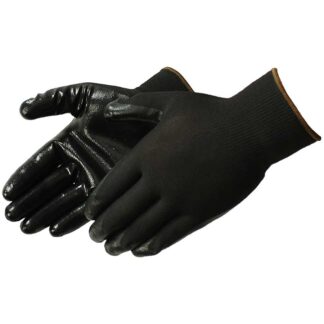 4631QBK
FLX™
Black Nitrile Coated Seamless Gloves
-
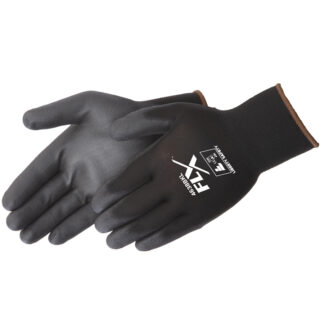 4638BK
FLX™
Black Polyurethane Coated Seamless Gloves
-
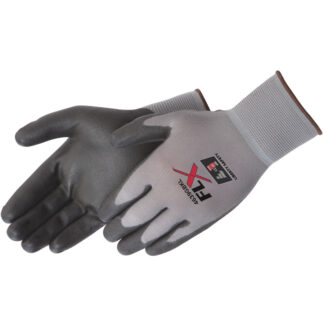 4639GBK
FLX™
Black Polyurethane Coated Seamless Gloves
-
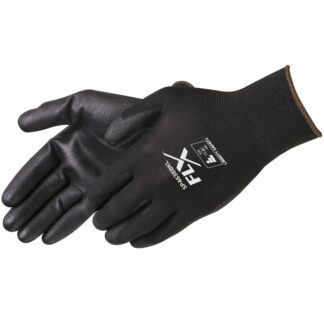 SP4638BK
FLX™
Black Polyurethane Coated Seamless Gloves
-
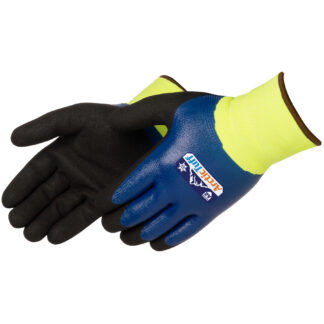 F4784LG
Arctic Tuff™
Black Sandy Foam Nitrile Coated Seamless Gloves
-
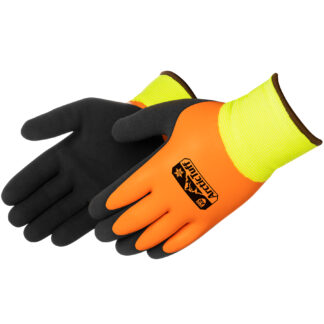 F4783HV
Arctic Tuff™
Black Sandy Latex Coated Seamless Gloves
-
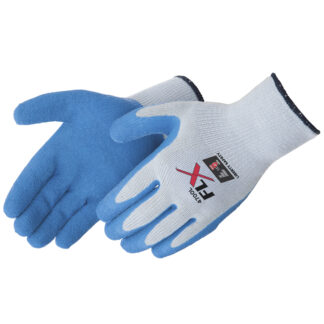 4700
4700FLX™
Blue Latex Coated Seamless Gloves
FAQ
The ideal glove coating depends on your specific work tasks, environment, and hazard exposure. Coatings enhance grip, improve resistance to snags, abrasions, punctures, and tears, and provide varying levels of protection against liquids or contaminants. Liberty Safety offers five primary coating types—each designed for different conditions and performance needs.
Below is an overview of each coating and how it performs in real‑world applications:
| Coating | Description |
| Nitrile, Foam Nitrile, and Sandy/Microfoam Nitrile | Nitrile coatings are durable, versatile, and ideal for general‑purpose work. They resist tears, abrasions, and temperature changes.
|
| Latex and Sandy Latex | Latex delivers outstanding grip in both wet and dry conditions. Sandy latex adds gritty texture for superior traction, making it popular for outdoor work such as construction, landscaping, and material handling. |
| Polyurethane (PU) | PU coatings offer excellent dexterity and tactile sensitivity due to their thin profile. They enhance puncture protection without feeling sticky and provide good resistance to oils and some chemicals. Ideal for precision tasks and small‑parts handling |
| PVC (Polyvinyl Chloride) | PVC resists abrasions and works well with adhesives—most adhesives won’t stick to its surface. It performs reliably in cold environments and is commonly used in applications involving sealants or repetitive contact with rough materials |
| Neoprene | Neoprene offers strong chemical stability and heat resistance. It provides excellent grip in dry, wet, and oily conditions but has lower abrasion resistance. Often used for chemical handling and self‑extinguishing applications. |
Coated seamless gloves come in several coating styles, each offering a different balance of protection, flexibility, and coverage.
Here’s a breakdown of the most common types:
| Coating Type | Description |
| Palm Coating | The coating covers only the palm and fingers, leaving the back of the hand uncoated. This design provides good grip and protection while maintaining breathability and flexibility. |
| Fully Coated | The entire glove—including the palm, fingers, knuckles, and back—is coated. This offers maximum coverage and protection, especially against liquids, chemicals, and abrasives. |
| ¾ Back Coating | The coating extends across the palm, fingers, and knuckles but leaves part of the back of the hand uncovered. This style balances protection with improved hand movement and ventilation. |
| Double Dipped | The glove is coated twice, typically combining full coating with an additional palm dip. This enhances durability, grip, and resistance to chemicals or liquids, making it ideal for demanding or high‑exposure tasks. |
Each coating type offers unique advantages, so selecting the right one depends on your work conditions, hazard exposure, and dexterity needs.
A coated seamless glove is a work glove made from a seamless knit shell with a polymer coating applied to the palm or fingers. The seamless construction eliminates pressure points and irritation, providing a comfortable, flexible fit that supports natural hand movement.
The coating adds performance benefits such as enhanced grip, added protection, and increased durability. Common coating materials include latex, nitrile, polyurethane, and PVC—each offering different levels of grip, abrasion resistance, chemical resistance, and tactile sensitivity.
Coated seamless gloves are widely used in manufacturing, construction, automotive work, and general industrial environments. Their combination of flexibility, comfort, and targeted protection makes them suitable for tasks ranging from precision handling to heavy material contact.
Choosing the right coated seamless glove depends on your specific job needs—considering the work conditions, hazards, and comfort preferences ensures you get the best performance and protection.
The grip you get from coated gloves depends on the polymer coating and the work conditions you’re dealing with. Each coating performs differently on dry, wet, oily, or abrasive surfaces. Some polymers offer excellent oil grip, while others excel in dry environments or provide enhanced abrasion resistance.
The chart below provides a general overview of how common glove coatings perform across different conditions, rated on a scale from 0 to 5, where higher scores indicate stronger grip performance.
| Polymer | Abrasion | Acids | Dry | Oil | Water |
| Latex | 5 | 1 | 5 | 0 | 5 |
| Neoprene | 2 | 4 | 4 | 5 | 4 |
| Nitrile | 4 | 4 | 4 | 4 | 4 |
| Polyurethane | 3 | 1 | 4 | 1 | 4 |
| PVC | 3 | 3 | 3 | 3 | 3 |
Showing 1–20 of 38 results